
If you've seen a wall that looks soft, cloudy, and gently weathered, like sun-faded plaster in an old European home, there's a good chance it was limewash. It's been one of the most talked-about wall finishes of the past few years, and unlike most trends, it's also one of the oldest.
Here's what limewash actually is, where it works (and where it doesn't), how it compares to Roman Clay, and how we used it in a primary bedroom in East Vancouver.
What is limewash paint?
Limewash paint is a natural, mineral-based finish made from lime and pigment, tinted with pigment and applied with a brush. Instead of forming a film on top of the wall like regular paint, it soaks into the surface and cures as it dries. In daylight, you might see broad, cloudy patches across a wall. Turn on a table lamp and smaller variations in the brushwork begin to show.
The result is a soft, matte, mottled finish with natural colour variation. No two walls look exactly alike, and the finish keeps shifting slightly over time as the lime cures and softens. That movement is the whole appeal: it gives a room depth and texture without wallpaper or plaster.
A few other things worth knowing:
It's breathable. Limewash lets moisture pass through the wall rather than trapping it.
It's naturally alkaline. Its high pH acts as a mild fungicide.
It's low impact. Portola's limewash, for example, is zero VOC.
Limewash vs regular paint
Regular paint gives you a flat, even, predictable colour. Limewash gives you the opposite: variation, brush movement and a finish that changes with the light through the day. If you want crisp, uniform walls, stick with paint. If you want a wall that feels like it has a history, limewash is worth considering.
It also behaves differently. You apply limewash with a brush, not a roller, and it actually gets lighter with each extra coat, so more coats aren't better.
Limewash vs Roman Clay
These two finishes often get confused, since both give walls a handmade, textured look. Portola Paints makes both and recently compared them side by side. Here's a summary:
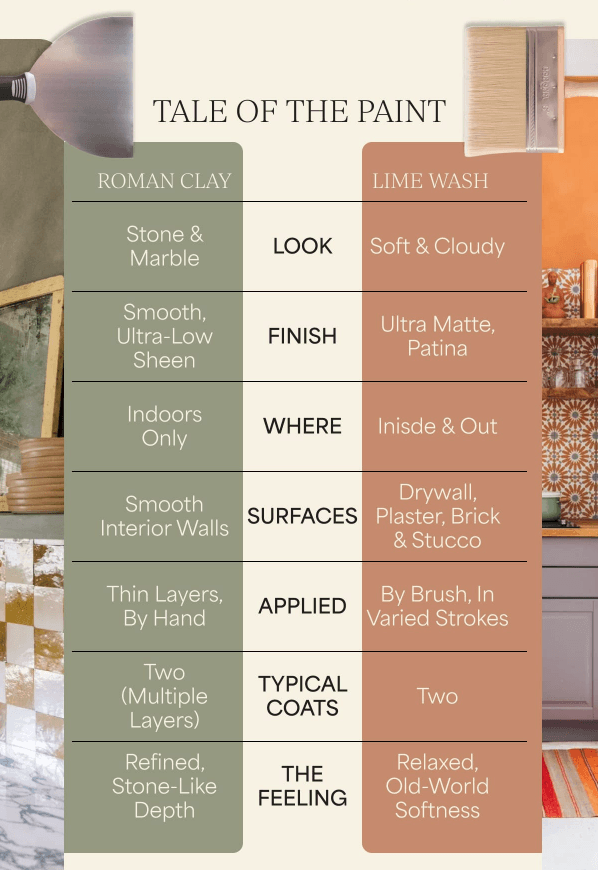
Source: Portola Paint
Where limewash works best
Bedrooms. The soft, cloudy finish is calming, which makes it a natural fit for a primary bedroom. Taking it up onto the ceiling wraps the whole room in colour.
Powder rooms and bathrooms. A small room is a low-commitment place to try a bold or dark limewash, and the depth of the finish makes a tiny space feel finished and intentional. We've written more about limewash powder room ideas in our bold bathroom post. For a full bathroom with a shower, ask the manufacturer about sealing the finish.
Ceilings and sloped walls. Limewash is forgiving on awkward architecture. Angles and slopes become part of the look, not something to hide.
Brick, stucco and exteriors. Limewash can soften brick or stucco inside or out. Exterior work has its own prep and sealing steps, so follow the brand's exterior instructions.
Project spotlight: a soft pink limewash bedroom in East Vancouver
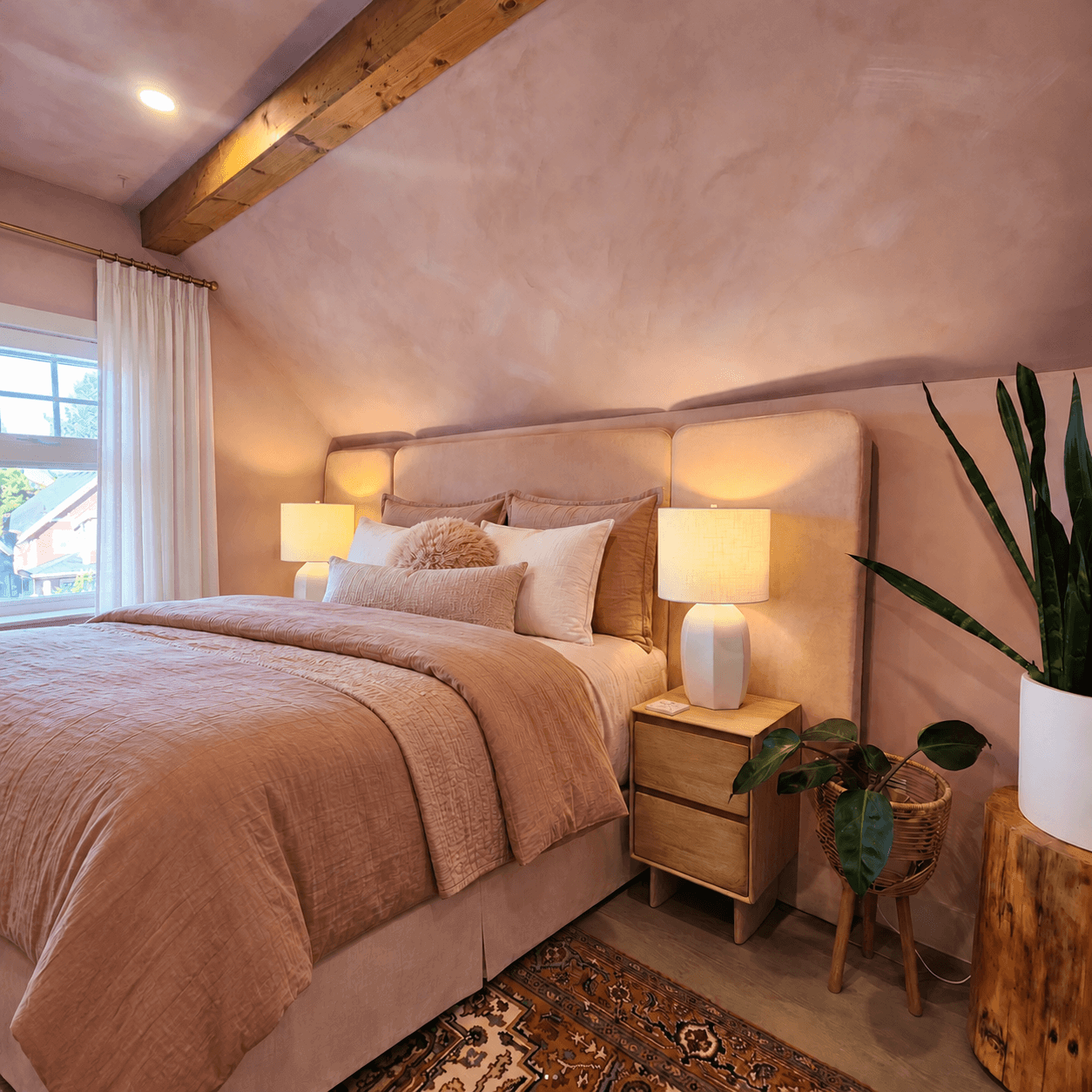
In our East Vancouver Residence, the primary bedroom sits under a sloped roofline. Rather than hiding the slopes, we leaned into them.
We chose Dumbo by Portola Paints, a cool pink that took on a soft blush tone in this room. We limewashed the walls and ceiling, including the slopes on either side of the beam. We painted all the trim, closet doors, and room doors in a matching colour. That distinction mattered. The brushwork gave the walls and ceiling their cloudy character, while the matching woodwork let the doors blend quietly into the background.
A custom blush velvet headboard with folding ends was built around the existing attic access door, and tonal trim and closet doors keep the room calm and cohesive. Linen drapery softened the window, and bedside lamps cast warm pools of light across the limewash.
Our client described it as feeling "like sleeping in pink clouds."
Project spotlight: A curved limewash fireplace wall in West Kelowna
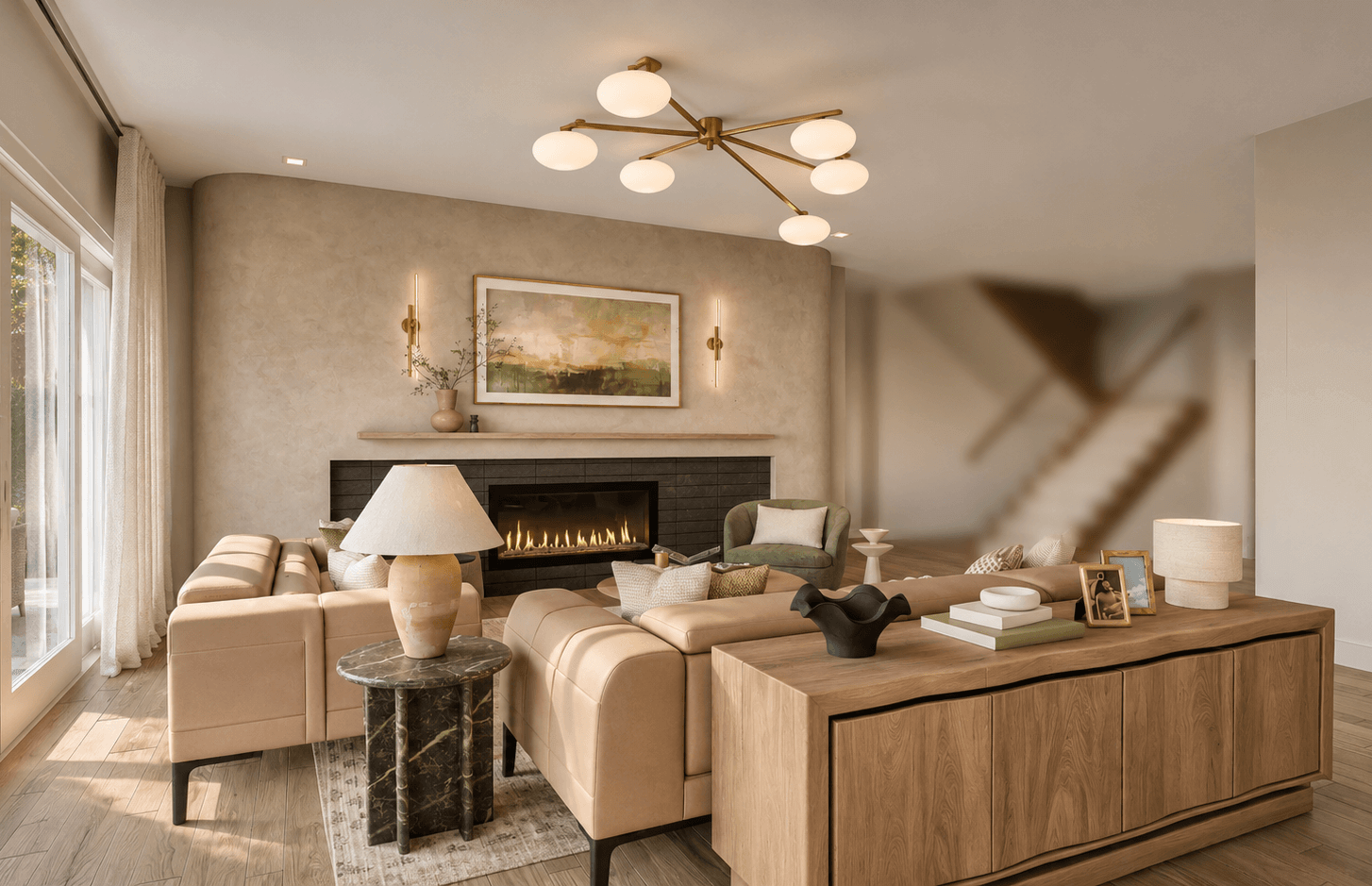
In our West Kelowna Residence, we used limewash throughout the primary bedroom. In the living room, we chose Meoded Lime Wash tinted to match Benjamin Moore’s Bleeker Beige (HC-80) for the fireplace wall.
We kept the existing black tile around the firebox, rounded the outer edges of the wall and carried the limewash around both curves. Daylight from the lake-facing windows highlights the finish's subtle variation.
A floating white oak mantel adds warmth above the black tile, and a pair of brass sconces frames the artwork on the Frame TV. Limewashing just one wall gave the fireplace a softer presence in the room.
Explore the fireplace and primary bedroom in the West Kelowna Residence.
Limewash brands we like
Portola Paints is the brand we used in East Vancouver. Greenworks Building Supply mixes its Lime Wash colours in Vancouver and ships across Canada, making it an accessible source for residents of BC and beyond.
Meoded is another great option and the brand you used in West Kelowna. Meoded Lime Wash is available through select independent Benjamin Moore retailers, including locations in Kelowna and Abbotsford, BC. Other Canadian retailers that carry Meoded include District Design, Colobar and GTA Paint & Decor.
Thinking about limewash for your home?
Choosing the right colour and deciding whether limewash, Roman Clay or paint suits a room is the kind of question we can help with in a Mini design session, wherever you are in Canada.