
A nursery often starts with one piece you fall in love with. Maybe it’s a botanical wallpaper, a vintage rug or an illustration from a favourite childhood book. That piece can guide the room's look. The layout comes from imagining how you’ll use it. Where will you settle in for a late-night feed? Can you reach a fresh sleeper while you’re changing the baby? These are the questions we’d start with as your nursery interior designer.
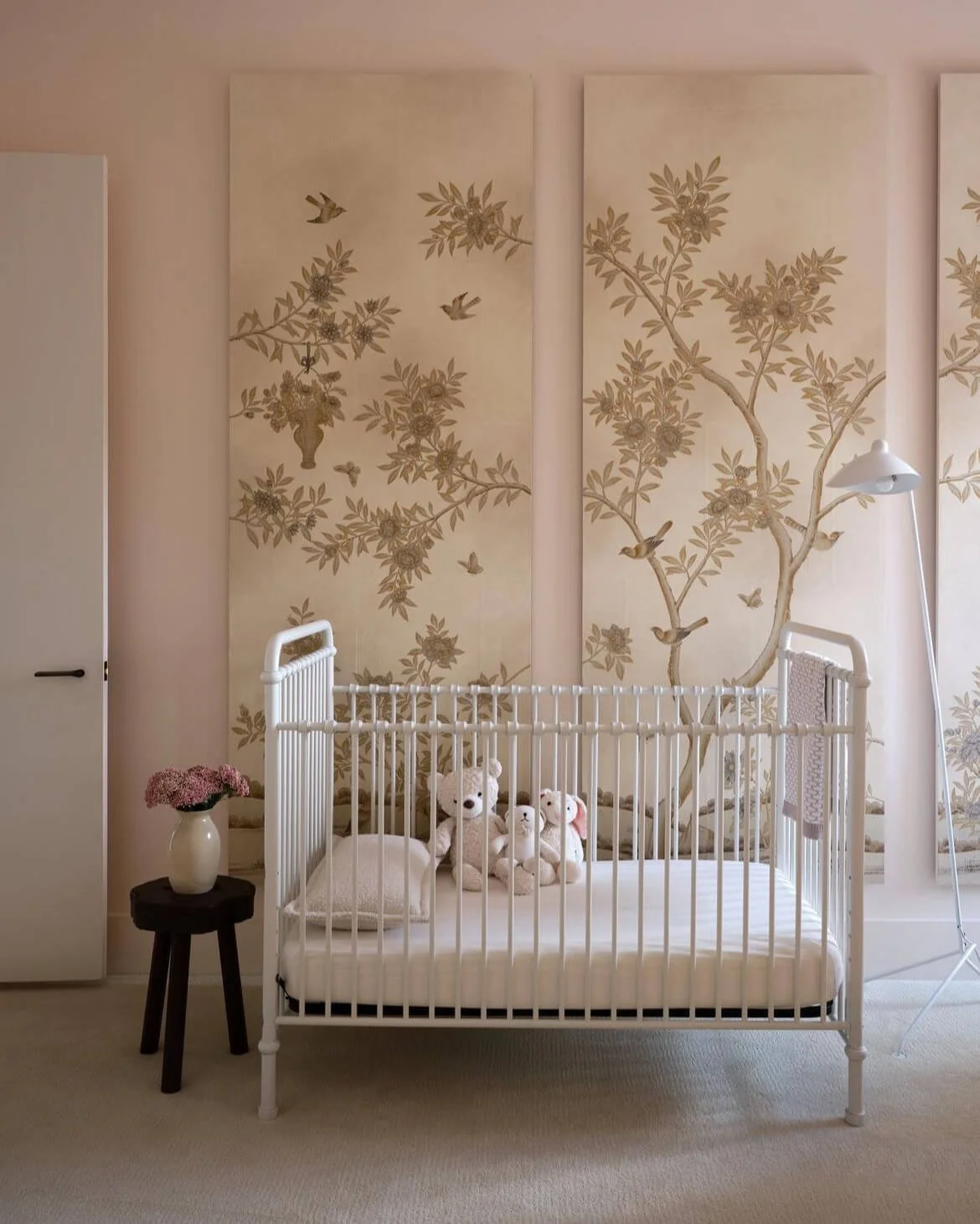
Finding inspiration for your nursery
Browse our Nursery Board on Pinterest, explore #projectnursery on Instagram or flip through a few design magazines. As you save images, note what caught your eye. You might love the olive-green trim in one nursery and the linen curtains in another. Those details tell you more about your taste than a collection of finished rooms alone.
Once you have a few favourites, bring them together on a mood board alongside any furniture you already own. Seeing your crib, rug and wallpaper side by side makes it easier to decide what belongs in the room. For help getting started, read our guide to creating a mood board.
Crafting your nursery colour palette
Let your favourite piece lead the way. If you’ve chosen a wallpaper with leafy branches on a cream background, you could carry the cream onto the surrounding walls and pick up a soft green in the drapery. A smaller detail in the print, like a dusty pink, might be all the colour you need for a cushion on the reading chair.
If your starting point is neutral, choose one or two accent colours you love. Try the paint samples beside your fabrics in the nursery itself. A beige that looks lovely in morning light can take on quite a different undertone once the lamps are on.
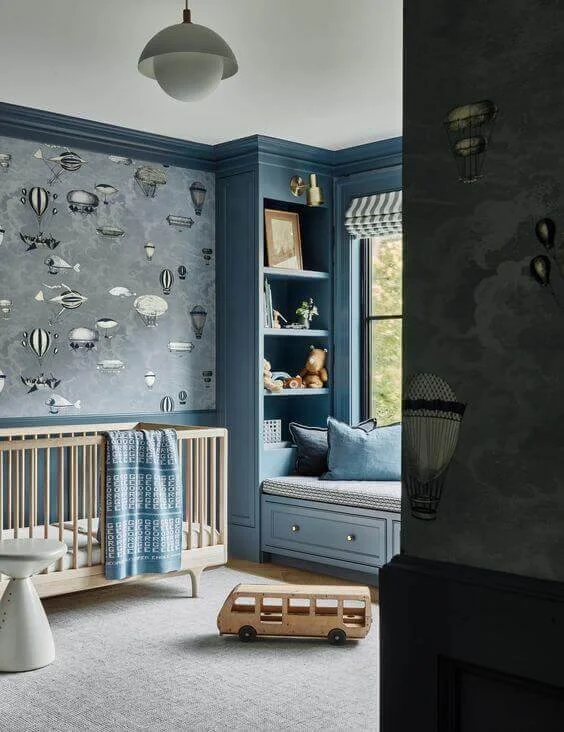
Source: Lauren Nelson Design
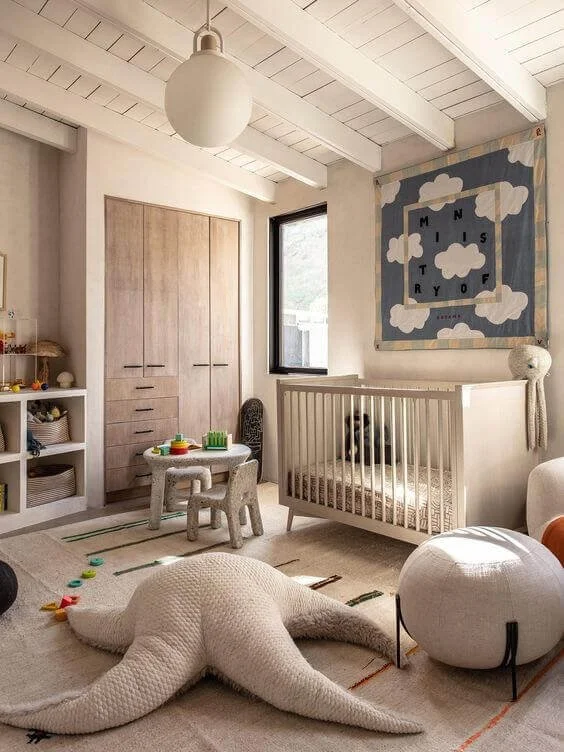
Source: Domino Magazine
Planning the furniture layout
Before ordering the larger pieces, measure the room and mark out three areas for sleeping, feeding and changing. Include the full depth of the dresser with its drawers open and, if you’re considering a glider, allow room for the chair to move. Walk the route from the doorway to the crib. You’ll appreciate a clear path when you’re moving through the room in low light.
Give the feeding corner as much thought as the crib. Choose a chair you can settle into comfortably and place a small side table within reach for a water glass, a burp cloth or the book you’ve been reading together. If there’s room, a footstool makes this a comfortable spot to return to for bedtime stories as your child grows.
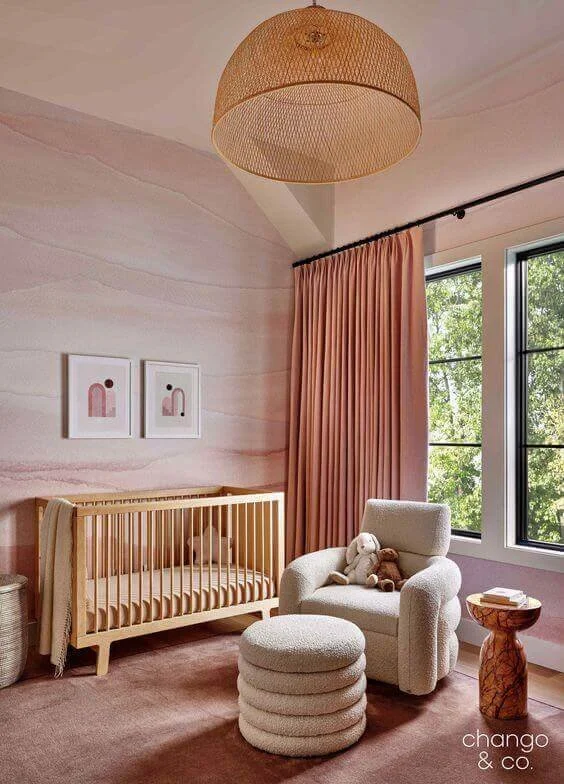
Source: Chango & Co.
Adding character to the walls
Revamp your nursery's look and feel with fresh wall finishes. A new paint colour is a great way to transform a room; otherwise, consider adding wallpaper or wall moulding. If time is of the essence, choose removable wall decals—there are some adorable options, and you can easily remove or replace them as your baby grows. Don’t forget to personalize the space by incorporating meaningful wall art or framed prints that add warmth and character.
Paint, wallpaper and wall moulding each bring something different to a nursery. A warm paint colour can wrap the whole room, while a botanical wallpaper can give an otherwise simple space its focal point. For a more personal touch, frame a page from a well-loved picture book or a small print that means something to your family.
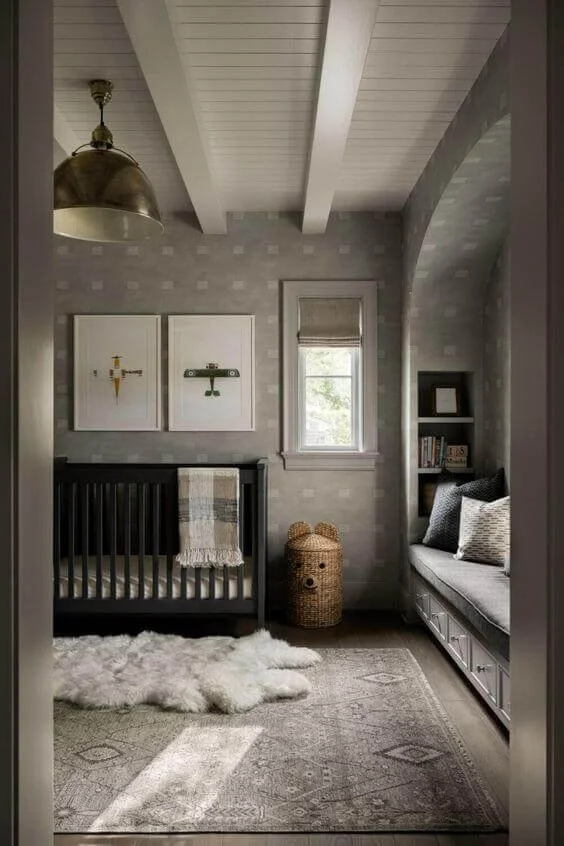
Source: Studio McGee
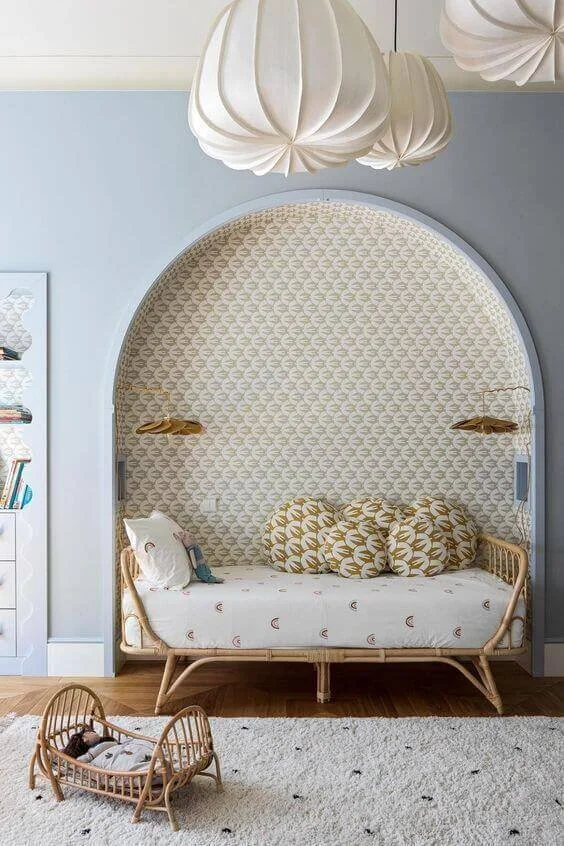
Source: Tapis Studio
Dressing the windows
Start with how much light you want to filter during daytime naps. A cordless blackout Roman shade is a practical base, and curtain panels add softness on either side of the window. This is also a good place to repeat a colour from elsewhere in the room. A narrow stripe can pick up a tone from the rug, while plain linen gives a busier wallpaper a little breathing room.
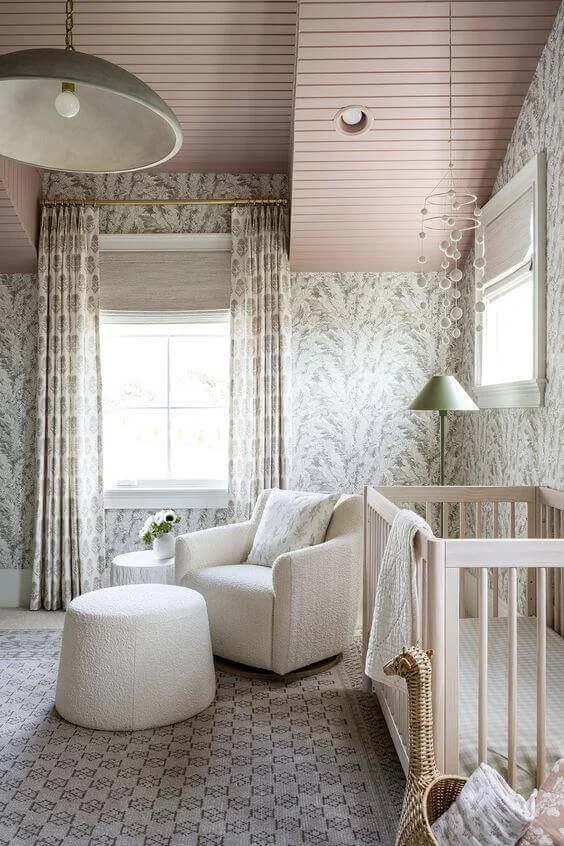
Source: Studio McGee
Making the most of nursery storage
Plan storage around where you’ll use each item. Keep diapers, wipes and spare sleepers together at the changing station. Place a basket of board books beside the chair, and use the upper shelves for keepsakes and clothes your baby hasn’t outgrown yet. In a smaller nursery, a crib with built-in drawers can make use of floor space that would otherwise go unused.
One question worth asking a kids’ room interior designer is which pieces will still earn their place once the crib is gone. A dresser sized for the next stage can hold baby clothes today and school clothes later. The feeding chair can become a reading corner, with favourite books moving to a low shelf your child can reach.
Looking for a baby room designer?
If you’re exploring nursery design in Toronto or elsewhere in Canada, we can work with you virtually to plan the furniture layout, choose finishes and bring the room together around pieces you love. Explore our interior design services to find the right starting point for your nursery.